

What is the pour point of the oil in an oil - immersed transformer?
As a seasoned supplier of oil - immersed transformers, I've encountered numerous inquiries regarding the technical aspects of these essential electrical devices. One question that frequently arises is about the pour point of the oil used in oil - immersed transformers. In this blog, I'll delve into what the pour point is, why it matters, and how it impacts the performance of oil - immersed transformers.
Understanding the Pour Point
The pour point of a liquid is defined as the lowest temperature at which it will flow under specific test conditions. In the context of the oil used in oil - immersed transformers, it is a critical property. Transformer oil, typically a mineral oil or a synthetic alternative, serves multiple functions. It acts as an insulator, preventing electrical discharges between the transformer's windings and other components. It also functions as a coolant, dissipating the heat generated during the transformer's operation.
When the temperature drops, the oil's viscosity increases. As the viscosity rises, the oil becomes thicker and less fluid. At the pour point, the oil reaches a state where it no longer flows freely. This is a significant concern because if the oil cannot flow, it cannot effectively perform its cooling and insulating functions.
Why the Pour Point Matters in Oil - Immersed Transformers
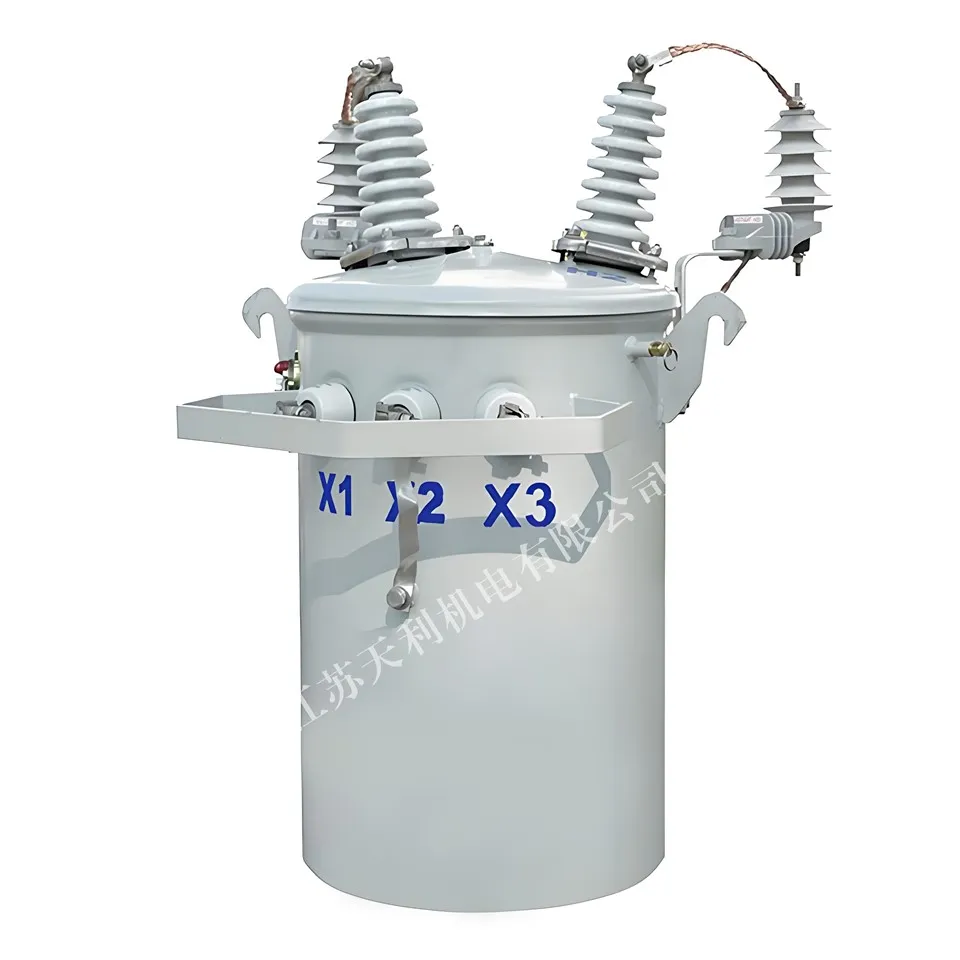
The pour point is of utmost importance for the reliable operation of oil - immersed transformers, especially in regions with cold climates. Consider a single - phase pole - mounted transformer Single - phase Pole - mounted Transformer installed in a mountainous area where winter temperatures can plummet. If the transformer oil has a high pour point, it may thicken or even solidify in cold weather.
When the oil thickens, its ability to transfer heat away from the transformer's core and windings is severely compromised. This can lead to overheating, which in turn can cause insulation breakdown, reduced efficiency, and ultimately, premature failure of the transformer. Moreover, the insulating properties of the oil may also be affected as its molecular structure changes with the increase in viscosity.
In addition, for large - scale distribution transformers like the 20kV Series Oil - immersed Distribution Transformer 20kVSeries Oil - immersed Distribution Transformer and the 35kV Series Oil - immersed Distribution 35kV Series Oil - immersed Distribution, a high pour point can pose a significant risk to the power grid. These transformers are crucial for delivering electricity to homes, businesses, and industries. Any disruption in their operation can lead to power outages, which can have far - reaching economic and social consequences.
Factors Affecting the Pour Point of Transformer Oil
Several factors can influence the pour point of transformer oil. The type of base oil used is a primary factor. Mineral oils, which are derived from crude oil, can have different pour points depending on their refining process and chemical composition. Some mineral oils may have relatively high pour points, while others can be refined to have lower pour points.
Additives can also play a role in modifying the pour point of transformer oil. Pour point depressants are commonly added to lower the pour point of the oil. These additives work by preventing the formation of wax crystals in the oil at low temperatures. Wax crystals can cause the oil to thicken and eventually reach its pour point. By inhibiting the growth of these crystals, pour point depressants allow the oil to remain fluid at lower temperatures.
The age and condition of the transformer oil can also affect its pour point. Over time, the oil can degrade due to oxidation, contamination, and thermal stress. Oxidation can lead to the formation of sludge and other by - products, which can increase the oil's viscosity and raise its pour point. Contamination with water, dirt, or other foreign substances can also have a similar effect.
Measuring the Pour Point
The pour point of transformer oil is measured using standardized test methods. One of the most commonly used methods is the ASTM D97 test. In this test, a sample of the oil is placed in a test jar and cooled at a specific rate. The jar is periodically tilted to check if the oil flows. The temperature at which the oil no longer flows is recorded as the pour point.
It is important to note that the pour point measured in the laboratory may not exactly reflect the behavior of the oil in real - world conditions. Factors such as agitation, the presence of other components in the transformer, and the rate of temperature change can all influence how the oil behaves at low temperatures.
Selecting the Right Transformer Oil Based on Pour Point
When selecting transformer oil, it is crucial to consider the environmental conditions in which the transformer will operate. In cold regions, it is advisable to choose an oil with a low pour point. This ensures that the oil can maintain its fluidity and perform its cooling and insulating functions even in extremely cold weather.
As a supplier of oil - immersed transformers, we offer a range of transformer oils with different pour points to meet the diverse needs of our customers. Our technical team can assist customers in selecting the most suitable oil based on their specific requirements, including the geographical location of the transformer installation, the expected temperature range, and the type of transformer.
Conclusion
The pour point of the oil in an oil - immersed transformer is a critical parameter that directly impacts the transformer's performance and reliability. Understanding the pour point, its significance, and the factors that affect it is essential for ensuring the long - term operation of transformers, especially in cold climates.

If you are in the market for oil - immersed transformers or need advice on selecting the right transformer oil, we are here to help. Our team of experts has extensive experience in the field and can provide you with tailored solutions to meet your specific needs. Contact us today to start a discussion about your requirements and explore how we can assist you in making the best choices for your electrical infrastructure.
References
- ASTM International. (Year). ASTM D97 - Standard Test Method for Pour Point of Petroleum Products.
- Electrical Power Research Institute. (Year). Transformer Oil Handbook.