

Hey there, fellow tech enthusiasts! As a supplier of phase shifters, I often get asked if these nifty devices can be used in an optical system. Well, let's dive right into it and find out!
First off, let's quickly understand what a phase shifter is. A phase shifter is a device that changes the phase of an electrical or optical signal. In the electrical world, it's commonly used to adjust the phase relationship between different signals, which is super important in things like radio frequency (RF) systems for communication. But in the optical domain, things get a bit more interesting.
In an optical system, light is the key player, and it has properties like amplitude, frequency, and phase. The phase of light can carry a ton of information, just like in electrical signals. So, can we use a phase shifter to manipulate this phase in an optical system? The answer is a resounding yes!
One of the main applications of phase shifters in optical systems is in fiber - optic communication. In modern high - speed fiber - optic networks, we need to transmit a massive amount of data over long distances. Phase - shift keying (PSK) is a modulation technique that uses phase shifters to encode information onto the optical signal. By changing the phase of the light wave at regular intervals, we can represent different binary values (0s and 1s). This allows for more efficient data transmission compared to just using amplitude modulation.
Another cool application is in optical interferometry. Interferometers are devices that use the interference of light waves to measure various physical quantities like distance, displacement, and refractive index. A phase shifter can be used to precisely control the phase difference between the interfering light waves. This gives us better control over the interference pattern and allows for more accurate measurements.
Now, let's talk about the types of phase shifters that can be used in optical systems. There are mainly two types: electro - optic phase shifters and thermo - optic phase shifters.
Electro - optic phase shifters work based on the electro - optic effect, which means that the refractive index of a material changes when an electric field is applied. By applying a voltage to the electro - optic material, we can change the phase of the light passing through it. These phase shifters are really fast, with response times in the order of picoseconds, which makes them ideal for high - speed optical communication systems.
Thermo - optic phase shifters, on the other hand, rely on the fact that the refractive index of a material changes with temperature. By heating or cooling the material, we can control the phase of the light. Although they are slower compared to electro - optic phase shifters, thermo - optic phase shifters are often easier to fabricate and are more cost - effective for some applications.
But it's not all rosy. There are some challenges when using phase shifters in optical systems. One of the big issues is maintaining the stability of the phase shift. External factors like temperature fluctuations, mechanical vibrations, and changes in the environment can all affect the performance of a phase shifter and cause the phase shift to vary. To overcome this, we often need to use feedback control systems to continuously monitor and adjust the phase shift.
Another challenge is minimizing the loss of light as it passes through the phase shifter. Any loss of light can reduce the signal - to - noise ratio in the optical system, which can degrade the overall performance. Manufacturers are constantly working on improving the design and materials of phase shifters to reduce this loss.

So, if you're in the business of optical systems, whether it's for communication, sensing, or research, phase shifters can be a valuable addition to your toolkit. And as a phase shifter supplier, we offer a wide range of high - quality phase shifters that are suitable for various optical applications.
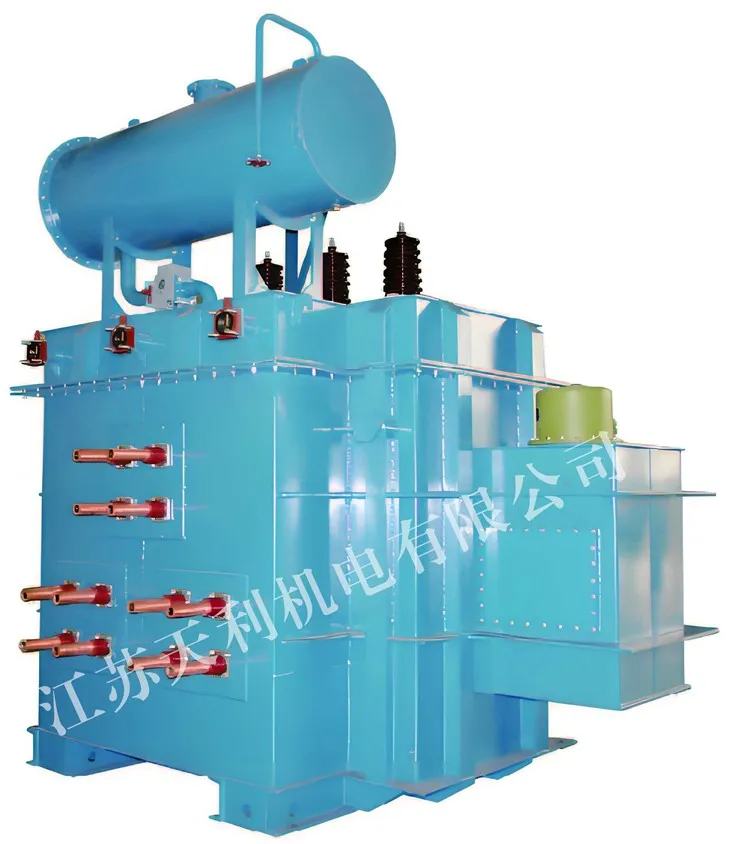
If you're also interested in other related electrical components, you might want to check out these links. There's Isolation Transformer, Marine Low Voltage Transformer, and Electric Furnace Transformer. These are great resources for anyone looking to expand their knowledge or find the right components for their electrical systems.
If you're thinking about purchasing phase shifters for your optical system, we're here to help. We can offer you expert advice on which phase shifter is best suited for your specific needs. Whether you're a big - scale manufacturer or a small - scale researcher, we've got you covered. So, don't hesitate to reach out and start a conversation with us. We're eager to work with you and help you take your optical system to the next level.
References:
- Saleh, B. E. A., & Teich, M. C. (2007). Fundamentals of Photonics. Wiley.
- Agrawal, G. P. (2012). Fiber - optic Communication Systems. Wiley.