

What is the overload capacity of an oil - immersed transformer? Well, let me break it down for you. As an oil - immersed transformer supplier, I've dealt with all sorts of questions about these transformers, and the overload capacity is a pretty common one.
First off, what exactly is overload capacity? Simply put, it's the ability of an oil - immersed transformer to handle a load that's greater than its rated capacity for a certain period. You see, in real - world scenarios, the power demand isn't always steady. There are times when there's a sudden spike in electricity consumption, like during hot summer days when everyone cranks up their air - conditioners, or in industrial areas where machinery might start up all at once.
The overload capacity of an oil - immersed transformer is crucial because it allows the power system to cope with these temporary surges without immediately shutting down or causing damage. But it's not like you can just keep piling on the load indefinitely. There are limits, and these limits are determined by several factors.
One of the most important factors is the transformer's design. Different types of oil - immersed transformers have different overload capabilities. For example, a Single - phase Pole - mounted Transformer is designed for relatively smaller and more distributed loads, like in residential areas. These transformers usually have a more limited overload capacity compared to larger industrial - grade transformers.
On the other hand, a 110kV Oil - immersed Transformer is built to handle much higher voltages and larger loads. These are often used in power transmission and distribution networks. They are designed with more robust insulation and cooling systems, which allows them to handle higher overloads for longer periods.
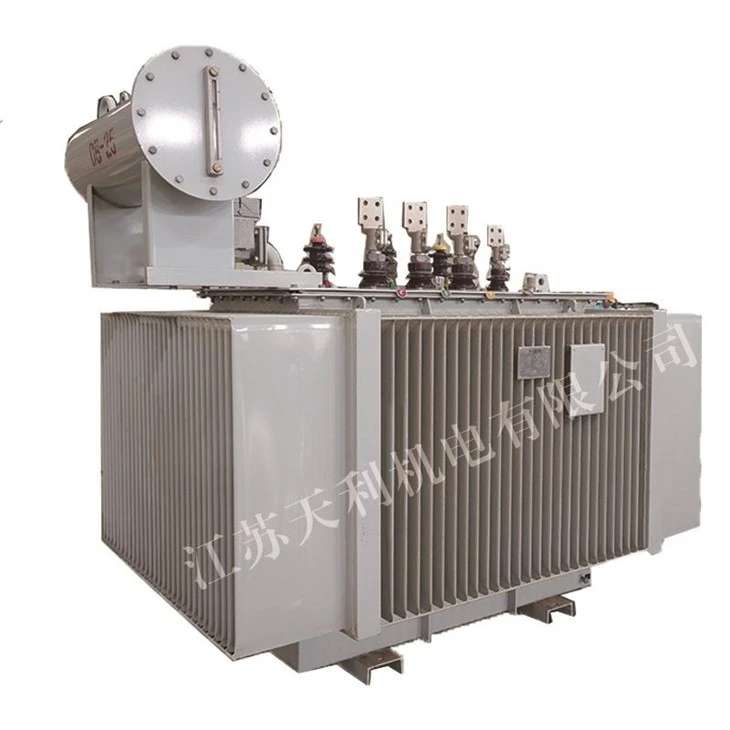

The cooling system of an oil - immersed transformer also plays a huge role in its overload capacity. Oil - immersed transformers use oil as a coolant to dissipate the heat generated during operation. When the transformer is overloaded, more heat is produced. If the cooling system can't keep up, the temperature of the transformer will rise rapidly, which can damage the insulation and reduce the lifespan of the transformer.
There are different types of cooling systems for oil - immersed transformers, such as ONAN (Oil Natural Air Natural), ONAF (Oil Natural Air Forced), and OFAF (Oil Forced Air Forced). The more advanced the cooling system, the better the transformer can handle overloads. For instance, a transformer with an OFAF cooling system can dissipate heat more efficiently than one with an ONAN system, so it can tolerate higher overloads.
Another factor that affects the overload capacity is the ambient temperature. If the transformer is operating in a hot environment, its ability to handle overloads is reduced. This is because the cooling system has to work harder to dissipate the heat, and there's less of a temperature difference between the transformer and the surrounding air to aid in heat transfer.
The duration of the overload is also a key consideration. A transformer can handle a short - term overload much better than a long - term one. Short - term overloads, say for a few minutes or hours, might not cause significant damage as long as the temperature doesn't rise too high. But if the overload persists for a long time, it can lead to permanent damage to the transformer.
Let's talk about how we, as a supplier, determine the overload capacity of our oil - immersed transformers. We conduct a series of tests during the manufacturing process. These tests simulate different load conditions and measure the temperature rise, electrical performance, and other parameters of the transformer. Based on the results of these tests, we can specify the overload capacity of the transformer in the product documentation.
For example, a 10kV Series Oil - immersed Distribution Transformer might be rated to handle a 20% overload for up to 2 hours under normal ambient conditions. This information is crucial for our customers because it helps them plan their power systems and ensure that the transformers can handle the expected load variations.
Now, why is it so important for you to understand the overload capacity of an oil - immersed transformer? Well, if you're in charge of a power system, whether it's a small residential complex or a large industrial facility, choosing the right transformer with the appropriate overload capacity can save you a lot of headaches. An undersized transformer that can't handle the overloads will lead to frequent outages, which can disrupt your operations and cost you money. On the other hand, an oversized transformer is a waste of resources and can be more expensive to purchase and operate.
As a supplier, we're here to help you make the right choice. We have a wide range of oil - immersed transformers with different overload capacities to suit your specific needs. Whether you need a small single - phase transformer for a rural area or a large high - voltage transformer for a power grid, we've got you covered.
If you're interested in learning more about our oil - immersed transformers or have any questions about overload capacity, feel free to reach out to us. We're always happy to have a chat and help you find the best solution for your power requirements.
In conclusion, the overload capacity of an oil - immersed transformer is a complex but important characteristic. It's determined by factors like design, cooling system, ambient temperature, and the duration of the overload. Understanding this capacity is essential for proper power system planning and operation. So, if you're in the market for an oil - immersed transformer, don't hesitate to contact us. We'll work with you to ensure you get the right transformer with the appropriate overload capacity for your needs.
References
- IEEE C57.110 - 2008, IEEE Guide for the Evaluation of Transformer Capability in Systems with Non - sinusoidal Load Currents
- IEC 60076 - 7:2018, Power transformers - Part 7: Loading guide for oil - immersed power transformers