

Calculating the rated capacity of an oil-immersed transformer is a crucial step in the power distribution and electrical engineering fields. As an oil-immersed transformer supplier, I've witnessed firsthand the importance of accurate capacity calculations for ensuring the efficient and safe operation of electrical systems. In this blog post, I'll guide you through the process of calculating the rated capacity of an oil-immersed transformer, providing practical insights and industry knowledge along the way.

Understanding the Basics of Transformer Rated Capacity
The rated capacity of a transformer, often measured in kilovolt-amperes (kVA) or megavolt-amperes (MVA), represents the maximum amount of electrical power that the transformer can handle continuously under specified conditions. It is a key parameter that determines the transformer's ability to meet the electrical load requirements of a particular application.
Several factors influence the rated capacity of an oil-immersed transformer, including the size and design of the transformer core, the type and quality of the insulating materials, the cooling system efficiency, and the ambient temperature. By understanding these factors, you can make informed decisions when selecting and sizing a transformer for your specific needs.
Step-by-Step Guide to Calculating Transformer Rated Capacity
Step 1: Determine the Load Requirements
The first step in calculating the rated capacity of an oil-immersed transformer is to determine the electrical load requirements of the system. This involves identifying all the electrical equipment and appliances that will be connected to the transformer and calculating their total power consumption.
To calculate the total load, you need to know the power rating (in watts or kilowatts) of each device and the number of devices that will be operating simultaneously. For example, if you have ten 100-watt light bulbs and five 500-watt motors, the total load can be calculated as follows:
Total load = (10 x 100 watts) + (5 x 500 watts) = 1000 watts + 2500 watts = 3500 watts
It's important to note that the load requirements may vary depending on the time of day, season, and usage patterns. Therefore, it's recommended to conduct a load analysis over a period of time to determine the peak load and average load requirements.
Step 2: Consider the Load Diversity Factor
The load diversity factor is a measure of how the actual load on a transformer varies from the sum of the individual loads. It takes into account the fact that not all electrical devices will be operating at their maximum capacity simultaneously.
The diversity factor is typically expressed as a decimal or a percentage and can range from 0 to 1. A diversity factor of 1 indicates that all devices are operating at their maximum capacity simultaneously, while a diversity factor of less than 1 indicates that the actual load is less than the sum of the individual loads.
To calculate the adjusted load, you need to multiply the total load by the diversity factor. For example, if the total load is 3500 watts and the diversity factor is 0.8, the adjusted load can be calculated as follows:
Adjusted load = 3500 watts x 0.8 = 2800 watts
Step 3: Account for Future Load Growth
When sizing a transformer, it's important to consider future load growth to ensure that the transformer can accommodate the increasing electrical demand over time. This involves estimating the expected growth rate of the load and adding a margin of safety to the calculated capacity.
The margin of safety is typically expressed as a percentage and can range from 10% to 25% or more, depending on the specific application and the expected load growth rate. For example, if the adjusted load is 2800 watts and you want to add a 20% margin of safety, the required transformer capacity can be calculated as follows:
Required transformer capacity = 2800 watts x (1 + 0.2) = 2800 watts x 1.2 = 3360 watts
Step 4: Select the Appropriate Transformer Rating
Once you have calculated the required transformer capacity, you need to select the appropriate transformer rating from the available options. Transformer ratings are typically standardized and are available in a range of values, such as 10 kVA, 15 kVA, 25 kVA, 50 kVA, 100 kVA, and so on.
It's important to select a transformer rating that is slightly larger than the calculated capacity to ensure that the transformer can handle the load without overheating or experiencing excessive voltage drops. For example, if the required transformer capacity is 3360 watts, you may choose a 5 kVA transformer (since 5 kVA = 5000 watts) to provide a sufficient margin of safety.
Types of Oil-Immersed Transformers and Their Applications
As an oil-immersed transformer supplier, we offer a wide range of transformers to meet the diverse needs of our customers. Some of the common types of oil-immersed transformers and their applications include:
- 220kV Oil-immersed Transformer: These high-voltage transformers are typically used in power transmission and distribution systems to step up or step down the voltage levels. They are designed to handle large amounts of electrical power and are commonly found in substations and power plants.
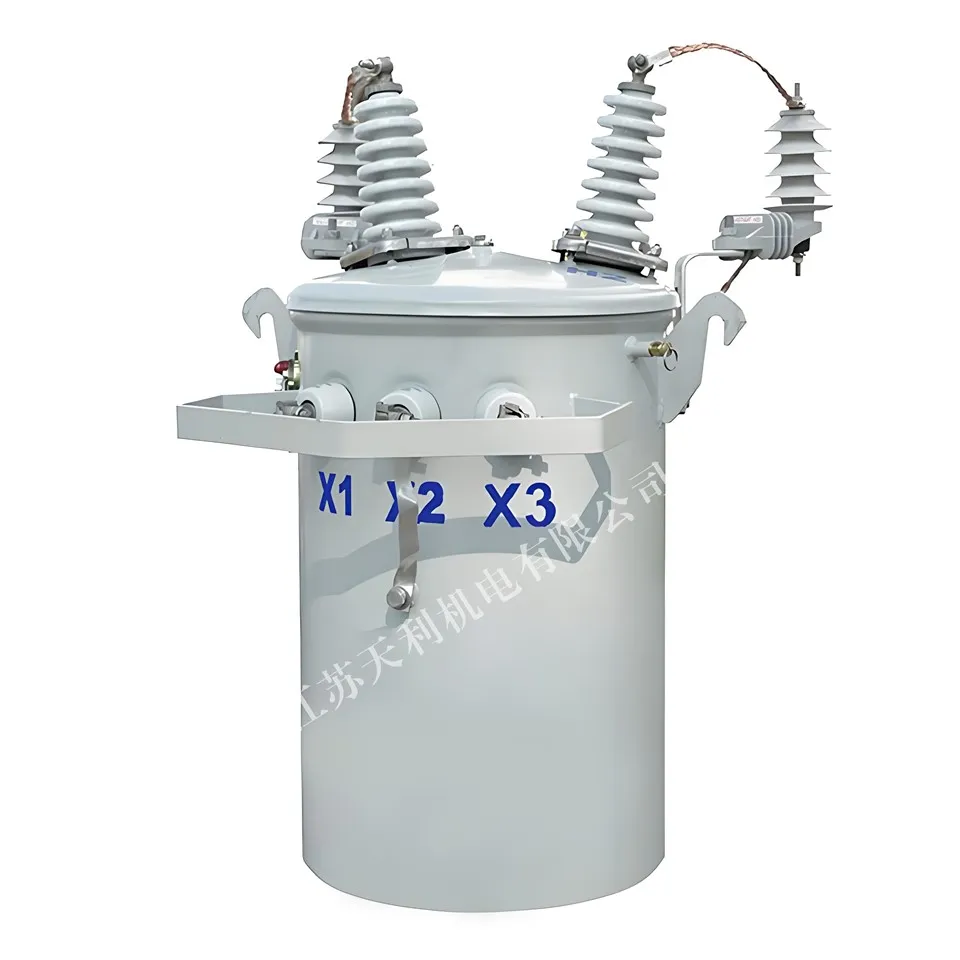
- Single-phase Pole-mounted Transformer: These transformers are commonly used in residential and small commercial applications to provide electrical power to single-phase loads. They are typically mounted on poles and are designed to be compact and easy to install.
- 10kV Series Oil-immersed Distribution Transformer: These transformers are used in distribution networks to step down the voltage from the transmission level to the utilization level. They are commonly found in industrial, commercial, and residential areas and are designed to provide reliable and efficient power distribution.
Conclusion
Calculating the rated capacity of an oil-immersed transformer is a complex process that requires a thorough understanding of the electrical load requirements, load diversity factor, future load growth, and other factors. By following the steps outlined in this blog post and consulting with a qualified electrical engineer or transformer supplier, you can ensure that you select the right transformer for your specific needs.
As an oil-immersed transformer supplier, we are committed to providing high-quality transformers and exceptional customer service. If you have any questions or need assistance with calculating the rated capacity of a transformer or selecting the right transformer for your application, please don't hesitate to contact us. We look forward to working with you to meet your electrical power needs.
References
- "Electrical Power Systems Quality" by Roger C. Dugan, Mark F. McGranaghan, and Surya Santoso.
- "Power System Analysis and Design" by J. Duncan Glover, Mulukutla S. Sarma, and Thomas J. Overbye.
- "Transformer Engineering: Design, Technology, and Diagnostics" by George C. Alexander and A. Kusko.