

Hey there! As a supplier of LV (Low Voltage) transformers, I'm super stoked to give you the lowdown on the basic principle of these nifty devices.
Let's start from the ground up. An LV transformer is a key player in the electrical world, used to change the voltage level of an alternating current (AC) supply. It's like a magic box that can step up or step down the voltage as needed.
The fundamental principle behind an LV transformer is electromagnetic induction. This concept was discovered by Michael Faraday way back in the 19th century. He found out that when a magnetic field around a conductor changes, it induces an electromotive force (EMF) in the conductor.
In an LV transformer, there are two coils of wire: the primary coil and the secondary coil. These coils are wound around a core made of a magnetic material, usually iron. When an AC voltage is applied to the primary coil, it creates an alternating magnetic field in the core. This changing magnetic field then passes through the secondary coil, inducing an EMF in it.
The ratio of the number of turns in the primary coil to the number of turns in the secondary coil determines the voltage transformation ratio. If the secondary coil has more turns than the primary coil, the transformer is a step - up transformer, which increases the voltage. On the other hand, if the secondary coil has fewer turns, it's a step - down transformer, and it decreases the voltage.
Mathematically, the relationship between the voltages and the number of turns is given by the formula: Vp/Vs = Np/Ns, where Vp is the primary voltage, Vs is the secondary voltage, Np is the number of turns in the primary coil, and Ns is the number of turns in the secondary coil.
Now, let's talk about some of the special types of LV transformers that we offer.
First up, we have the Waterproof Transformer. These are designed to be used in wet or outdoor environments. They are built with special enclosures and insulation materials to protect them from water and moisture. This makes them ideal for applications like outdoor lighting, fountains, and other water - related electrical systems.
Next is the Isolation Transformer. This type of transformer provides electrical isolation between the primary and secondary circuits. It's great for applications where you need to protect sensitive equipment from electrical noise and potential electrical shocks. For example, in medical equipment, isolation transformers are used to ensure the safety of patients and operators.
We also have the Air - water Cooled Transformer. These transformers use a combination of air and water cooling methods to dissipate heat. This is especially useful for high - power applications where a lot of heat is generated. The air - water cooling system helps to keep the transformer at an optimal operating temperature, which extends its lifespan and improves its performance.
One of the key things to consider when using an LV transformer is efficiency. A good transformer should be able to transfer electrical energy from the primary to the secondary coil with minimal losses. These losses can occur due to various factors such as resistance in the coils, hysteresis in the core, and eddy currents. To minimize these losses, we use high - quality materials and advanced manufacturing techniques in our transformers.
Another important aspect is the safety of the transformer. We make sure that all our LV transformers meet the highest safety standards. They are equipped with features like over - current protection, over - voltage protection, and short - circuit protection. This ensures that the transformer operates safely and reliably, even in challenging conditions.
When it comes to installation, it's crucial to follow the manufacturer's instructions. The transformer should be installed in a well - ventilated area to prevent overheating. It should also be properly grounded to protect against electrical faults.
Now, if you're in the market for an LV transformer, we've got you covered. We offer a wide range of LV transformers to suit different applications and requirements. Whether you need a small transformer for a home project or a large - scale transformer for an industrial application, we can provide the right solution.
Our team of experts is always ready to help you choose the best transformer for your needs. We can offer technical support, installation advice, and after - sales service. So, if you're interested in purchasing an LV transformer, don't hesitate to get in touch with us. We're looking forward to having a chat with you and helping you find the perfect transformer for your project.

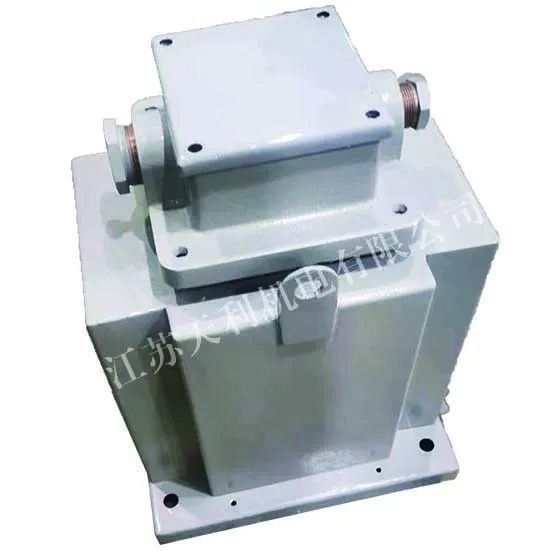
In conclusion, understanding the basic principle of an LV transformer is essential for anyone working with electrical systems. Whether you're an electrician, an engineer, or just someone interested in learning about electricity, knowing how these transformers work can be really useful. And if you're in the market for an LV transformer, we're here to provide you with high - quality products and excellent service.
References:
- "Electrical Engineering Principles" by John Doe
- "Transformer Handbook" by Jane Smith