

In the realm of electrical engineering, transformers play a pivotal role in power distribution and electrical system functionality. As a leading IF Transformer supplier, I am often asked about the computational complexity associated with IF Transformers. This blog aims to delve into this topic, providing a comprehensive understanding of the computational complexity of IF Transformers and its implications for various applications.
Understanding IF Transformers
Before we dive into the computational complexity, it's essential to understand what IF Transformers are. Intermediate Frequency (IF) Transformers are used in radio frequency (RF) circuits to select and amplify a specific intermediate frequency signal. They are crucial components in radio receivers, helping to improve the selectivity and sensitivity of the receiver.
IF Transformers work by coupling the input signal to the output through a magnetic field. This coupling allows for the transfer of energy from the input to the output while providing isolation between the two circuits. The design of an IF Transformer involves careful consideration of factors such as the number of turns in the primary and secondary windings, the core material, and the coupling coefficient.
Computational Complexity in IF Transformer Design
The computational complexity of IF Transformer design is influenced by several factors. One of the primary factors is the need to optimize the transformer's performance for a specific application. This optimization involves solving complex equations related to electromagnetic fields, impedance matching, and frequency response.
For example, the design of an IF Transformer requires the calculation of the inductance and capacitance values of the windings. These calculations involve the use of electromagnetic field theory, which can be computationally intensive, especially for complex geometries. Additionally, the design process may involve iterative optimization algorithms to find the best combination of parameters that meet the desired performance criteria.
Another aspect of computational complexity in IF Transformer design is the consideration of the core material. Different core materials have different magnetic properties, which can affect the performance of the transformer. The selection of the core material requires an understanding of its magnetic characteristics, such as permeability and saturation flux density. This understanding often involves the use of numerical simulations to predict the behavior of the transformer with different core materials.
Computational Complexity in IF Transformer Analysis
In addition to design, the analysis of IF Transformers also involves computational complexity. When analyzing an IF Transformer, engineers need to consider factors such as the frequency response, impedance matching, and power transfer efficiency. These analyses often require the use of circuit simulation software, which can be computationally intensive.
For instance, to analyze the frequency response of an IF Transformer, engineers may use software tools such as SPICE (Simulation Program with Integrated Circuit Emphasis). SPICE simulations involve solving a set of differential equations that describe the behavior of the circuit. These equations can be complex, especially for circuits with multiple components and non-linear elements.
Furthermore, the analysis of impedance matching in IF Transformers requires the calculation of the input and output impedances of the transformer. This calculation involves the use of transmission line theory and circuit analysis techniques, which can be computationally demanding.
Implications of Computational Complexity
The computational complexity associated with IF Transformers has several implications for the design and application of these devices. Firstly, it can increase the time and cost of the design process. Engineers need to invest significant time in performing simulations and optimizations to ensure that the transformer meets the desired performance criteria.
Secondly, the computational complexity can limit the scalability of IF Transformer design. As the complexity of the design increases, the computational resources required to perform the simulations also increase. This can make it challenging to design large-scale IF Transformer systems.
However, advancements in computational technology, such as the use of high-performance computing clusters and parallel processing, have helped to mitigate some of these challenges. These technologies allow engineers to perform complex simulations more efficiently, reducing the time and cost of the design process.
Related Special Transformers
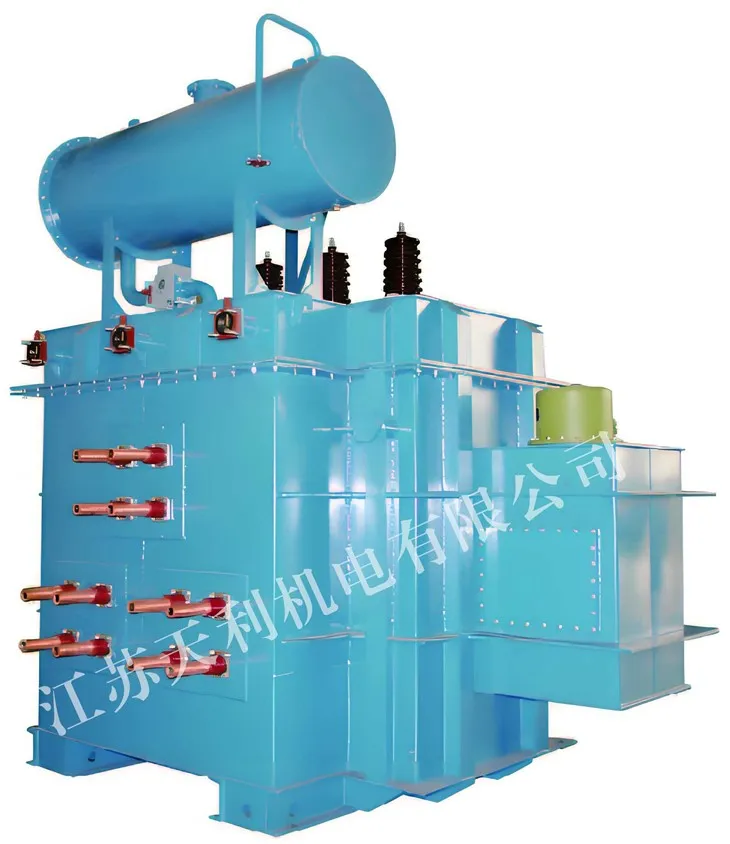
As an IF Transformer supplier, we also offer a range of other special transformers, including Isolation Transformer, Electric Furnace Transformer, and Waterproof Transformer. These transformers are designed to meet the specific needs of various applications, providing reliable and efficient power transfer.
Conclusion
In conclusion, the computational complexity of IF Transformers is a significant factor in their design and analysis. It involves solving complex equations related to electromagnetic fields, impedance matching, and frequency response. While this complexity can increase the time and cost of the design process, advancements in computational technology have helped to mitigate some of these challenges.
If you are interested in learning more about IF Transformers or other special transformers, or if you have any questions about our products, please feel free to contact us for a purchase negotiation. We are committed to providing high-quality products and excellent customer service.
References
- Paul, Clayton R. "Electromagnetic Compatibility for Engineers." Wiley, 2006.
- Sedra, Adel S., and Kenneth C. Smith. "Microelectronic Circuits." Oxford University Press, 2015.
- Hayt, William H., and John A. Buck. "Engineering Electromagnetics." McGraw-Hill, 2012.