

Hey there! As a supplier of phase shifters, I often get asked some pretty interesting questions. One that comes up quite a bit is, "Can a phase shifter change the amplitude of a signal?" Let's dive into this topic and see what we can find out.

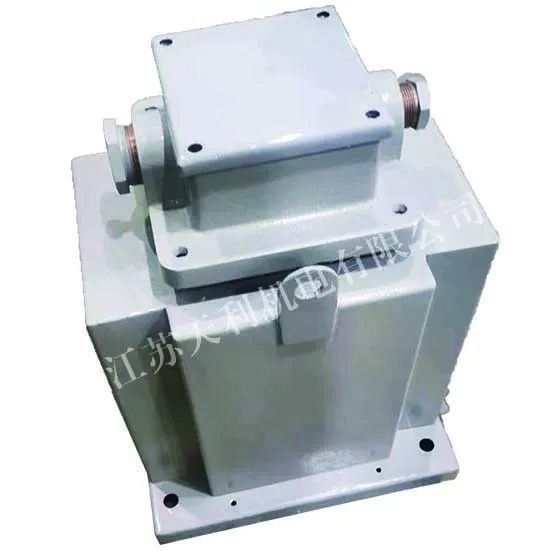
First off, let's understand what a phase shifter is. A phase shifter is a device that can change the phase of an input signal. It's used in a whole bunch of applications, like in communication systems, radar, and even in some audio equipment. The main job of a phase shifter is to shift the phase of the signal, but does it have any impact on the amplitude?
To answer this question, we need to look at how a phase shifter works. Most phase shifters operate by introducing a time delay to the input signal. This time delay causes a shift in the phase of the signal. For example, if you have a sine wave as your input signal, a phase shifter can make the wave start earlier or later in its cycle.
Now, the key thing to note is that in an ideal phase shifter, the amplitude of the signal remains unchanged. The phase shifter is designed to only affect the phase of the signal, not its amplitude. This is because the fundamental operation of a phase shifter is based on time delay, and time delay doesn't directly change the strength or magnitude of the signal.
However, in the real world, things aren't always that simple. There are a few factors that can cause a phase shifter to have an impact on the amplitude of a signal.
One factor is the insertion loss. Insertion loss is the loss of signal power that occurs when a device, like a phase shifter, is inserted into a circuit. When a phase shifter has insertion loss, it means that some of the signal power is being absorbed or dissipated by the device. This results in a decrease in the amplitude of the output signal compared to the input signal.
Another factor is the non - linearity of the phase shifter. In some cases, the phase shifter may not operate in a perfectly linear manner. Non - linearity can cause distortion in the signal, which can lead to changes in the amplitude. For example, if the phase shifter has a non - linear response to the input signal, it may introduce harmonics or intermodulation products, which can affect the overall amplitude of the signal.
Let's take a look at some specific types of phase shifters. There are different types, such as analog phase shifters and digital phase shifters.
Analog phase shifters typically use components like variable capacitors or inductors to introduce the phase shift. These components can have some inherent losses, which can contribute to a change in the amplitude of the signal. Digital phase shifters, on the other hand, use digital circuits to control the phase shift. They are generally more precise, but they can also have some issues with quantization errors, which can potentially affect the amplitude.
Now, let's talk about the applications where the relationship between phase shift and amplitude change matters. In communication systems, for example, maintaining a constant amplitude is crucial for proper signal transmission. If the amplitude of the signal changes too much due to the phase shifter, it can lead to errors in the received signal. In radar systems, the accuracy of the phase shift and the stability of the amplitude are important for accurate target detection and tracking.
If you're interested in learning more about related electrical equipment, you might want to check out these links. You can learn about Phase - shifting Transformer, Electric Furnace Transformer, and Waterproof Transformer. These are some specialized transformers that play important roles in different electrical applications.
As a phase shifter supplier, we understand the importance of providing high - quality phase shifters that minimize any unwanted changes in the amplitude of the signal. We use advanced design techniques and high - quality components to ensure that our phase shifters have low insertion loss and good linearity.
If you're in the market for a phase shifter, whether it's for a small - scale project or a large - scale industrial application, we'd love to have a chat with you. We can discuss your specific requirements and help you find the right phase shifter for your needs. Don't hesitate to reach out and start a conversation about your phase shifter procurement.
In conclusion, while the primary function of a phase shifter is to change the phase of a signal, in the real world, it can have some impact on the amplitude due to factors like insertion loss and non - linearity. But with the right design and quality components, these effects can be minimized. So, if you're looking for a reliable phase shifter, give us a shout, and we'll work with you to get the best solution.
References:
- Principles of Electronic Communication Systems by Louis E. Frenzel
- RF Circuit Design by Chris Bowick