

Medium frequency transformers (MFTs) have emerged as crucial components in modern electrical systems, offering numerous advantages over traditional transformers. Their unique characteristics make them suitable for a wide range of applications, and the question of whether they can be used in marine applications is an intriguing one. As a medium frequency transformer supplier, I will delve into the technical aspects, advantages, challenges, and potential applications of MFTs in the marine environment.
Technical Overview of Medium Frequency Transformers
Medium frequency transformers operate at frequencies typically between 400 Hz and 20 kHz, which is higher than the standard 50 or 60 Hz used in most power distribution systems. This higher operating frequency allows for a more compact design and reduced weight compared to low-frequency transformers. The core material used in MFTs is often of a high-permeability type, such as ferrite or nanocrystalline alloys, which can efficiently handle the higher frequencies without excessive losses.
The winding design of MFTs is also optimized for the medium frequency operation. The use of multiple strands of thin wire, known as Litz wire, helps to reduce the skin effect and proximity effect, which are more pronounced at higher frequencies. These effects can cause increased resistance and power losses in the windings, so the careful design of the winding is essential for the efficient operation of the transformer.
Advantages of Medium Frequency Transformers in Marine Applications
One of the primary advantages of using MFTs in marine applications is their compact size and light weight. In a marine environment, space and weight are often critical factors, especially on ships and offshore platforms where every cubic meter and kilogram counts. The reduced size and weight of MFTs can lead to significant savings in terms of installation space, structural support requirements, and fuel consumption due to the lower overall weight of the electrical system.
Another advantage is the higher efficiency of MFTs. Operating at a higher frequency allows for a more efficient transfer of power, which can result in lower energy losses and reduced operating costs. This is particularly important in the marine industry, where energy efficiency is a top priority for both economic and environmental reasons.
MFTs also offer better control and regulation capabilities. The ability to operate at a higher frequency enables faster response times and more precise control of the electrical power. This can be beneficial in applications such as power conversion, where accurate voltage and current control are required. For example, in a marine power system that includes variable-speed drives or energy storage systems, MFTs can provide the necessary power conditioning and control to ensure stable and reliable operation.
Challenges of Using Medium Frequency Transformers in Marine Applications
Despite their many advantages, there are also several challenges associated with using MFTs in marine applications. One of the main challenges is the harsh marine environment, which includes high humidity, saltwater corrosion, and mechanical vibrations. These conditions can have a significant impact on the performance and reliability of the transformers.
High humidity can cause moisture to penetrate the insulation of the transformer, leading to insulation breakdown and electrical failures. Saltwater corrosion can also damage the external components of the transformer, such as the enclosure and the terminals. To mitigate these risks, MFTs used in marine applications need to be designed with appropriate protective measures, such as waterproof enclosures and corrosion-resistant materials.
Mechanical vibrations are another concern in the marine environment. Ships and offshore platforms are subject to constant vibrations from the engines, waves, and other sources. These vibrations can cause mechanical stress on the transformer windings and core, which can lead to premature failure. To address this issue, MFTs need to be designed with robust mechanical construction and proper mounting arrangements to ensure that they can withstand the vibrations.
Potential Applications of Medium Frequency Transformers in Marine
There are several potential applications of MFTs in the marine industry. One of the most promising applications is in power conversion systems. In modern ships, there is a growing need for efficient and flexible power conversion to meet the diverse electrical loads. MFTs can be used in power converters, such as AC - DC and DC - AC converters, to provide high - quality power conversion with reduced size and weight.
Another application is in energy storage systems. With the increasing use of renewable energy sources on ships, such as solar panels and wind turbines, energy storage systems are becoming more important. MFTs can be used to interface the energy storage devices, such as batteries or supercapacitors, with the main power system. They can help to regulate the charging and discharging of the energy storage devices and ensure efficient power transfer.
MFTs can also be used in electric propulsion systems. Electric propulsion is becoming more popular in the marine industry due to its higher efficiency and lower emissions compared to traditional diesel engines. MFTs can be used in the power electronics systems that drive the electric motors, providing the necessary power conversion and control.

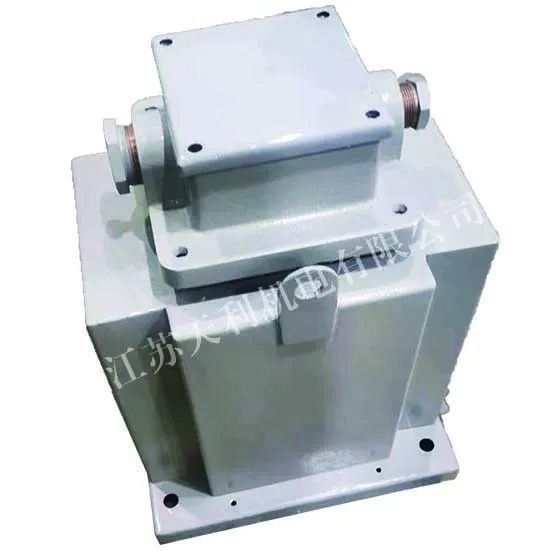
Related Products and Their Applications
In addition to medium frequency transformers, there are other types of special transformers that can be relevant to marine applications or related industries. For example, the Mining Transformer is designed to meet the specific requirements of the mining industry, which often has similar challenges in terms of harsh environments and high - power requirements. Although the mining environment is different from the marine environment, some of the design principles and technologies used in mining transformers can be adapted for marine applications.
The Waterproof Transformer is another product that can be of interest. As mentioned earlier, the marine environment is characterized by high humidity and the presence of water. A waterproof transformer can be used in applications where there is a risk of water ingress, providing additional protection and reliability.
The Air - water Cooled Transformer can be a suitable choice for marine applications where efficient cooling is required. In a confined space on a ship or an offshore platform, heat dissipation can be a challenge. An air - water cooled transformer can use a combination of air and water to remove heat from the transformer, ensuring optimal performance and longevity.
Conclusion and Call to Action
In conclusion, medium frequency transformers have the potential to play an important role in marine applications. Their compact size, high efficiency, and excellent control capabilities make them attractive for power conversion, energy storage, and electric propulsion systems. However, the challenges posed by the harsh marine environment need to be carefully addressed through proper design and protective measures.
If you are interested in exploring the use of medium frequency transformers in your marine projects or need more information about our products and solutions, we encourage you to get in touch with us for a detailed discussion. Our team of experts is ready to assist you in finding the most suitable transformers for your specific requirements.
References
- Grover, F. W. (1946). Inductance Calculations: Working Formulas and Tables. Dover Publications.
- Chapman, S. J. (2012). Electric Machinery Fundamentals. McGraw - Hill.
- Dorf, R. C., & Bishop, R. H. (2012). Modern Control Systems. Pearson.