

As a medium frequency transformer supplier, I've encountered numerous challenges and requirements from our clients. One of the most crucial aspects in the operation of medium frequency transformers is over - voltage protection. In this blog, I'll delve into how to implement over - voltage protection for a medium frequency transformer.
Understanding the Risks of Over - Voltage in Medium Frequency Transformers
Before we discuss the implementation of over - voltage protection, it's essential to understand why over - voltage is a concern. Medium frequency transformers are designed to operate within a specific voltage range. When the voltage exceeds this range, several problems can occur.
Over - voltage can lead to excessive core saturation. In a medium frequency transformer, the core is a critical component that helps in the efficient transfer of energy. When the voltage is too high, the magnetic flux density in the core increases beyond its designed limit. This can cause the core to saturate, resulting in increased core losses, overheating, and potentially permanent damage to the core material.
Another risk is insulation breakdown. The insulation materials used in medium frequency transformers are rated for a certain voltage level. An over - voltage situation can stress the insulation, leading to partial discharges or even complete breakdown. Once the insulation fails, it can cause short - circuits within the transformer, which can be extremely dangerous and costly to repair.
Methods of Implementing Over - Voltage Protection
1. Voltage Sensing and Monitoring
The first step in over - voltage protection is to sense and monitor the voltage. This can be achieved using voltage sensors. There are various types of voltage sensors available, such as resistive voltage dividers, capacitive voltage dividers, and Hall - effect voltage sensors.
Resistive voltage dividers are simple and cost - effective. They work by dividing the input voltage into a smaller, measurable voltage using a series of resistors. The output voltage of the divider is proportional to the input voltage, allowing us to monitor the voltage level accurately.
Capacitive voltage dividers, on the other hand, use capacitors to divide the voltage. They are suitable for high - frequency applications and can provide a more accurate measurement in some cases.
Hall - effect voltage sensors are based on the Hall effect, which is the production of a voltage difference across an electrical conductor when a magnetic field is applied perpendicular to the current flow. These sensors can provide non - contact voltage measurement, which is useful in some situations where direct connection is not possible or desirable.
Once the voltage is sensed, it needs to be monitored continuously. This can be done using a microcontroller or a dedicated monitoring circuit. The monitoring system should be set to trigger an alarm or a protective action when the voltage exceeds a pre - set threshold.
2. Surge Arresters
Surge arresters are another important component in over - voltage protection. They are designed to divert the excess voltage to the ground when a surge occurs. There are different types of surge arresters, such as metal - oxide varistors (MOVs) and gas - discharge tubes.

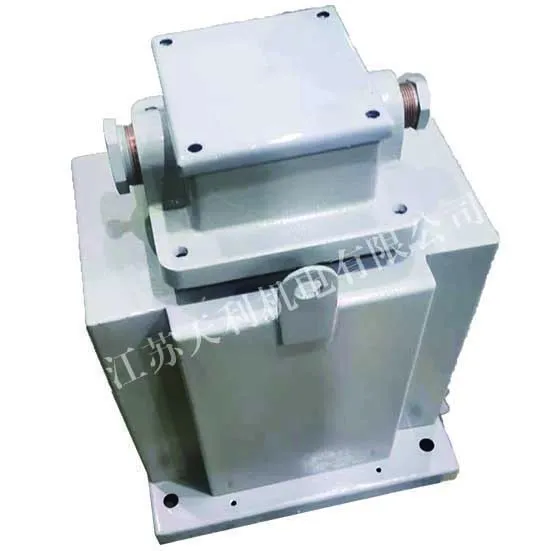
Metal - oxide varistors are widely used in medium frequency transformers. They have a nonlinear resistance characteristic, which means that their resistance decreases significantly when the voltage exceeds a certain level. When an over - voltage surge occurs, the MOV conducts the excess current to the ground, protecting the transformer from damage.
Gas - discharge tubes are also effective in protecting against high - energy surges. They contain a gas that ionizes when the voltage exceeds a certain threshold, creating a low - resistance path for the surge current to flow to the ground.
3. Automatic Voltage Regulation (AVR)
Automatic voltage regulation can be used to maintain the output voltage of the medium frequency transformer within a safe range. AVR systems typically use a feedback control mechanism to adjust the transformer's tap changer or the input voltage to the transformer.
The tap changer is a device that allows us to change the turns ratio of the transformer. By adjusting the tap changer, we can increase or decrease the output voltage of the transformer. The AVR system continuously monitors the output voltage and adjusts the tap changer accordingly to keep the voltage within the desired range.
In some cases, the AVR system can also adjust the input voltage to the transformer. For example, if the input voltage is too high, the AVR system can reduce the input voltage using a voltage regulator or a variable transformer.
Considerations for Different Applications
The implementation of over - voltage protection may vary depending on the specific application of the medium frequency transformer. For example, in applications where the transformer is used in a harsh environment, additional protection measures may be required.
If the transformer is used in a waterproof environment, a Waterproof Transformer may be needed. These transformers are designed to withstand moisture and water ingress, which can be a significant factor in over - voltage protection. The insulation materials used in waterproof transformers are more resistant to moisture, reducing the risk of insulation breakdown due to over - voltage.
In industrial applications such as electric furnaces, Electric Furnace Transformer are often used. These transformers are subject to high - power surges and voltage fluctuations. Therefore, more robust over - voltage protection systems may be required, such as multiple surge arresters and advanced voltage monitoring and control systems.
For marine applications, Marine Low Voltage Transformer are used. These transformers need to be protected from the corrosive effects of saltwater and the harsh marine environment. Over - voltage protection in marine transformers should also take into account the potential for electrical interference from other equipment on the vessel.
Importance of Regular Maintenance
Even with a well - designed over - voltage protection system, regular maintenance is crucial. The voltage sensors, surge arresters, and AVR systems need to be inspected and tested regularly to ensure that they are functioning properly.
The voltage sensors should be calibrated periodically to ensure accurate voltage measurement. The surge arresters should be checked for signs of damage or degradation, such as cracks or discoloration. If a surge arrester is found to be damaged, it should be replaced immediately.
The AVR system should also be tested to ensure that it can adjust the voltage correctly. This can be done by simulating an over - voltage situation and checking if the AVR system can bring the voltage back to the normal range.
Conclusion
Implementing over - voltage protection for a medium frequency transformer is a complex but essential task. By using a combination of voltage sensing and monitoring, surge arresters, and automatic voltage regulation, we can effectively protect the transformer from the risks associated with over - voltage.
It's important to consider the specific application of the transformer and choose the appropriate protection measures accordingly. Regular maintenance is also crucial to ensure the long - term reliability of the over - voltage protection system.
If you are in need of a medium frequency transformer or have any questions about over - voltage protection, please feel free to contact us for a detailed discussion and procurement negotiation. We are committed to providing high - quality transformers and comprehensive protection solutions to meet your needs.
References
- Grover, A. K. (2007). Transformer Engineering: Design, Technology, and Diagnostics. CRC Press.
- Chapman, S. J. (2012). Electric Machinery Fundamentals. McGraw - Hill Education.
- Westinghouse Electric Corporation. (1982). Electrical Transmission and Distribution Reference Book. Westinghouse Electric Corporation.