

As a phase shifter supplier, I'm often asked about the materials used to make these essential devices. Phase shifters play a crucial role in various applications, including telecommunications, radar systems, and power transmission. Understanding the materials that go into their construction is vital for both engineers and end - users. In this blog, I'll delve into the different materials commonly used in phase shifters and their unique properties.
Semiconductor Materials
Semiconductor materials are at the heart of many modern phase shifters. Silicon (Si) is one of the most widely used semiconductor materials. It has excellent electrical properties, such as high electron mobility and a relatively wide bandgap. Silicon - based phase shifters are known for their reliability and cost - effectiveness. They are suitable for a wide range of frequencies, from low - frequency applications in telecommunications to high - frequency operations in radar systems.
Gallium Arsenide (GaAs) is another important semiconductor material. GaAs offers higher electron mobility compared to silicon, which allows for faster switching speeds. This makes GaAs - based phase shifters ideal for high - frequency applications where quick phase changes are required. GaAs phase shifters are commonly used in military radar systems and high - speed communication networks.
Indium Phosphide (InP) is a semiconductor material that combines high electron mobility with a large breakdown voltage. InP - based phase shifters are capable of operating at extremely high frequencies, making them suitable for advanced communication systems and millimeter - wave applications. However, InP is more expensive than silicon and GaAs, which limits its use in some cost - sensitive applications.
Dielectric Materials
Dielectric materials are used in phase shifters to control the phase of an electromagnetic wave. One of the most common dielectric materials is alumina (Al₂O₃). Alumina has a high dielectric constant, which means it can store a large amount of electrical energy. It also has good thermal conductivity, which helps to dissipate heat generated during operation. Alumina - based phase shifters are widely used in microwave and millimeter - wave applications.
Barium Strontium Titanate (BST) is a ferroelectric dielectric material. BST has a non - linear dielectric constant, which can be tuned by applying an external electric field. This property makes BST an excellent material for voltage - controlled phase shifters. BST - based phase shifters are used in applications where dynamic phase control is required, such as in phased - array antennas.
Polytetrafluoroethylene (PTFE), also known as Teflon, is a low - loss dielectric material. PTFE has a very low dielectric constant and a low loss tangent, which means it can transmit electromagnetic waves with minimal attenuation. PTFE - based phase shifters are commonly used in high - frequency applications where low loss is critical, such as in satellite communication systems.

Magnetic Materials
Magnetic materials are used in some types of phase shifters, particularly those based on ferrite technology. Ferrite materials, such as yttrium iron garnet (YIG), have unique magnetic properties. YIG has a high saturation magnetization and a low magnetic loss. It can be used to control the phase of an electromagnetic wave by changing the magnetic field applied to it. YIG - based phase shifters are commonly used in microwave and millimeter - wave applications, especially in radar systems and communication networks.
Metal Materials
Metals are used in phase shifters for various purposes, such as providing electrical conductivity and mechanical support. Copper is a widely used metal due to its high electrical conductivity. It is used in the construction of transmission lines and connectors in phase shifters. Aluminum is another metal that is commonly used. It is lightweight and has good corrosion resistance, making it suitable for applications where weight is a concern, such as in aerospace and satellite systems.
Applications and Material Selection
The choice of materials for a phase shifter depends on the specific application requirements. For example, in a telecommunications application where cost - effectiveness and reliability are important, silicon - based semiconductor materials and alumina dielectric materials may be the preferred choice. In high - frequency military radar applications, GaAs or InP semiconductor materials and YIG magnetic materials may be more suitable.
In power transmission systems, phase shifters are used to control the power flow between different parts of the grid. In these applications, materials with high electrical conductivity and good thermal properties are required. Copper and aluminum are commonly used for the electrical connections, while dielectric materials with high breakdown voltage are used to insulate the components.
Related Products
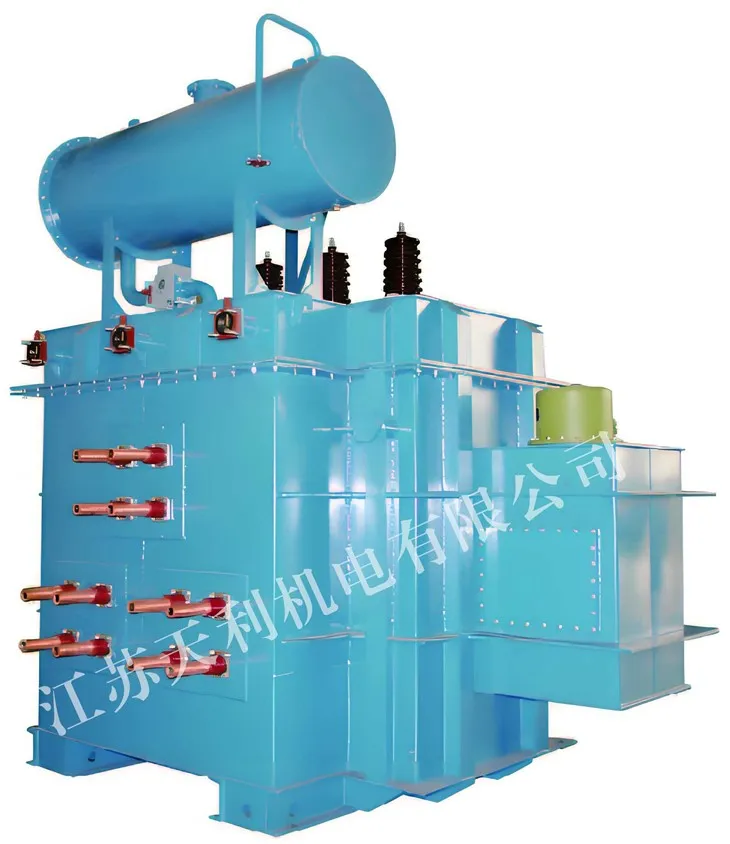
In addition to phase shifters, our company also offers a range of related products. For example, we have Air - water Cooled Transformer, which is designed to provide efficient cooling for electrical systems. Our Isolation Transformer is used to isolate electrical circuits and protect sensitive equipment from electrical noise. We also have Electric Furnace Transformer, which is specifically designed for use in electric furnaces.
Contact for Procurement
If you are interested in purchasing phase shifters or any of our related products, we encourage you to contact us for a detailed discussion. Our team of experts can provide you with the technical information and support you need to make the right choice for your application. Whether you are a small - scale user or a large - scale industrial customer, we are committed to providing high - quality products and excellent service.
References
- Pozar, D. M. (2011). Microwave Engineering. Wiley.
- Collin, R. E. (2001). Foundations for Microwave Engineering. Wiley.
- Bhartia, P., & Bahl, I. J. (1988). Microwave Solid - State Circuit Design. Wiley.