

Special transformers play a crucial role in various electrical systems, offering unique features and capabilities tailored to specific applications. Among these special transformers, the autotransformer stands out as a remarkable device with distinct characteristics and advantages. As a leading supplier of special transformers, I am excited to delve into the world of autotransformers and explore their significance in modern electrical engineering.
Understanding the Autotransformer
An autotransformer is a type of transformer that has a single winding, which serves as both the primary and secondary winding. Unlike a conventional two-winding transformer, where the primary and secondary windings are electrically isolated from each other, the autotransformer has a common electrical connection between the input and output circuits. This shared winding configuration allows for a more compact and efficient design, making autotransformers ideal for applications where space and cost are significant considerations.
The basic principle of an autotransformer is based on the concept of electromagnetic induction. When an alternating current (AC) is applied to the primary section of the winding, it creates a magnetic field that induces a voltage in the secondary section of the same winding. The ratio of the input voltage to the output voltage is determined by the turns ratio of the winding, which is the ratio of the number of turns in the primary section to the number of turns in the secondary section.
Advantages of Autotransformers
One of the primary advantages of autotransformers is their high efficiency. Since there is only one winding, there are fewer losses associated with the transformer, such as copper losses and core losses. This results in a more efficient transfer of electrical energy from the input to the output, reducing energy consumption and operating costs.
Another significant advantage of autotransformers is their compact size. Compared to conventional two-winding transformers, autotransformers require less copper and iron, making them smaller and lighter. This makes them particularly suitable for applications where space is limited, such as in electrical substations, industrial plants, and mobile equipment.
Autotransformers also offer a high degree of flexibility in terms of voltage regulation. By adjusting the turns ratio of the winding, it is possible to vary the output voltage over a wide range, allowing for precise control of the electrical supply. This makes autotransformers ideal for applications where voltage regulation is critical, such as in power distribution systems and electrical machinery.
Applications of Autotransformers
Autotransformers are widely used in a variety of applications across different industries. Some of the common applications of autotransformers include:
- Voltage Regulation: Autotransformers are commonly used to regulate the voltage in power distribution systems. By adjusting the turns ratio of the winding, it is possible to increase or decrease the output voltage to match the requirements of the load. This helps to ensure a stable and reliable electrical supply, reducing the risk of equipment damage and downtime.
- Motor Starting: Autotransformers are often used to start large motors. By providing a reduced voltage during the starting process, autotransformers help to limit the inrush current and reduce the stress on the motor and the electrical system. This helps to extend the lifespan of the motor and improve its performance.
- Impedance Matching: Autotransformers can be used to match the impedance of a load to the impedance of a source. This helps to maximize the power transfer between the source and the load, improving the efficiency of the electrical system.
- Audio Systems: Autotransformers are used in audio systems to match the impedance of the amplifier to the impedance of the speaker. This helps to ensure a proper transfer of audio signals, improving the sound quality and performance of the audio system.
Types of Autotransformers
There are several types of autotransformers available, each designed for specific applications and requirements. Some of the common types of autotransformers include:
- Step-Up Autotransformers: Step-up autotransformers are used to increase the output voltage relative to the input voltage. They are commonly used in power transmission systems to boost the voltage for long-distance transmission.
- Step-Down Autotransformers: Step-down autotransformers are used to decrease the output voltage relative to the input voltage. They are commonly used in power distribution systems to reduce the voltage for use in residential and commercial buildings.
- Variable Autotransformers: Variable autotransformers, also known as variacs, allow for continuous adjustment of the output voltage. They are commonly used in laboratory settings and industrial applications where precise voltage control is required.
Special Transformers Offered by Our Company
As a leading supplier of special transformers, we offer a wide range of autotransformers and other special transformers to meet the diverse needs of our customers. In addition to autotransformers, some of the other special transformers we offer include:
- Phase-shifting Transformer: Phase-shifting transformers are used to control the phase angle of the voltage in a power system. They are commonly used in power transmission systems to improve the stability and reliability of the electrical grid.
- Air-water Cooled Transformer: Air-water cooled transformers are designed to dissipate heat more efficiently than traditional oil-cooled transformers. They are commonly used in applications where space is limited or where environmental concerns are a factor.
- Waterproof Transformer: Waterproof transformers are designed to operate in wet or damp environments. They are commonly used in outdoor applications, such as in street lighting, water treatment plants, and marine vessels.
Conclusion
Autotransformers are a versatile and efficient type of transformer that offers several advantages over conventional two-winding transformers. With their high efficiency, compact size, and flexibility in voltage regulation, autotransformers are widely used in a variety of applications across different industries. As a leading supplier of special transformers, we are committed to providing our customers with high-quality autotransformers and other special transformers that meet their specific needs and requirements.
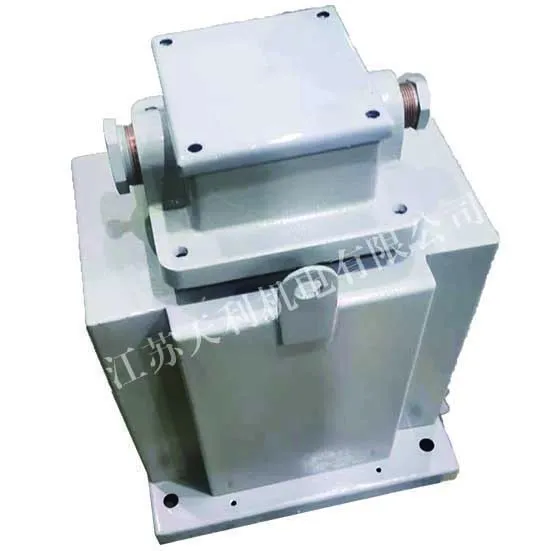

If you are interested in learning more about autotransformers or any of our other special transformers, please do not hesitate to contact us. Our team of experts is available to answer your questions and provide you with the information you need to make an informed decision. We look forward to working with you to meet your electrical needs.
References
- Electric Machinery Fundamentals, Stephen J. Chapman
- Power System Analysis and Design, J. Duncan Glover, Mulukutla S. Sarma, Thomas J. Overbye
- Electrical Transformers and Power Equipment, John F. McDonald