

As a supplier of Air - water Cooled Transformers, I understand the critical importance of a reliable monitoring system for these transformers. A well - designed monitoring system can ensure the safe and efficient operation of the transformer, detect potential faults in advance, and reduce maintenance costs. One of the key aspects of a monitoring system is the communication interfaces it uses to transmit data. In this blog, I will explore the various communication interfaces available for an air - water cooled transformer's monitoring system.
1. Wired Communication Interfaces
1.1 RS - 232
RS - 232 is one of the oldest and most widely used serial communication interfaces. It is a simple and reliable way to transfer data between two devices. In the context of an air - water cooled transformer's monitoring system, RS - 232 can be used to connect the monitoring sensors to a local data acquisition unit (DAQ). For example, temperature sensors, pressure sensors, and flow sensors installed on the transformer can send their data to the DAQ via an RS - 232 connection.
The advantage of RS - 232 is its simplicity. It has a relatively straightforward protocol, and most microcontrollers and computers have built - in RS - 232 ports. However, its limitations include a short communication distance (usually up to 15 meters) and a relatively low data transfer rate (up to 115.2 kbps).
1.2 RS - 485
RS - 485 is an improvement over RS - 232. It is a differential signaling interface that allows for longer communication distances (up to 1200 meters) and a higher data transfer rate (up to 10 Mbps). In an air - water cooled transformer monitoring system, RS - 485 can be used to connect multiple sensors and devices in a multi - drop network.
For instance, if there are several temperature sensors distributed around the transformer, they can all be connected to a single RS - 485 bus. The DAQ can then communicate with all these sensors simultaneously, reducing the wiring complexity. RS - 485 is also more resistant to electrical interference, which is crucial in an industrial environment where transformers are located.
1.3 Ethernet
Ethernet is a widely used local area network (LAN) technology. It offers high - speed data transfer (commonly 10 Mbps, 100 Mbps, or even 1 Gbps) and can cover relatively long distances within a building or a campus. In an air - water cooled transformer monitoring system, Ethernet can be used to connect the DAQ to a central monitoring server.
The monitoring data can be transmitted in real - time over the Ethernet network, allowing remote monitoring and control. For example, engineers can access the transformer's status data from their offices or even from different locations via the Internet. Ethernet also supports a variety of protocols, such as TCP/IP, which enables seamless integration with other network - based systems.
2. Wireless Communication Interfaces
2.1 Wi - Fi
Wi - Fi is a popular wireless local area network technology. It provides high - speed wireless connectivity within a limited range (usually up to 100 meters indoors). In an air - water cooled transformer monitoring system, Wi - Fi can be used to connect the monitoring sensors or DAQ to a local access point.
This allows for easy installation and flexibility, as there is no need for extensive wiring. For example, if the transformer is located in a large industrial hall, Wi - Fi can be used to connect the sensors to a nearby access point, and then the data can be transmitted to the central monitoring system. However, Wi - Fi signals can be affected by obstacles and interference from other wireless devices.
2.2 Bluetooth
Bluetooth is a short - range wireless communication technology. It is mainly used for connecting devices over a short distance (usually up to 10 meters). In an air - water cooled transformer monitoring system, Bluetooth can be used for on - site configuration and data retrieval.
For example, a technician can use a Bluetooth - enabled mobile device to connect to the monitoring system of the transformer. This allows for quick access to the transformer's status data and configuration parameters without the need for a wired connection. Bluetooth is also energy - efficient, which is beneficial for battery - powered sensors.
2.3 ZigBee
ZigBee is a low - power, wireless mesh network protocol. It is designed for applications that require low data rates and long battery life. In an air - water cooled transformer monitoring system, ZigBee can be used to connect multiple sensors in a large - scale network.
The sensors can form a mesh network, where each sensor can act as a router to relay data to the central monitoring point. This is particularly useful when the sensors are spread over a large area. ZigBee also has a relatively low cost, making it an attractive option for large - scale monitoring systems.
3. Industrial Communication Protocols
3.1 Modbus
Modbus is a widely used industrial communication protocol. It can be implemented over RS - 232, RS - 485, or Ethernet. In an air - water cooled transformer monitoring system, Modbus can be used to standardize the communication between the sensors, DAQ, and the monitoring server.
Modbus allows for easy data exchange, such as reading the values of sensors (e.g., temperature, pressure) and writing control commands to the transformer's control devices. It has a simple and easy - to - understand structure, which makes it popular in industrial automation applications.
3.2 Profibus
Profibus is another industrial communication protocol. It is mainly used in factory automation and process control systems. In an air - water cooled transformer monitoring system, Profibus can be used to connect the transformer's monitoring devices to a programmable logic controller (PLC).
The PLC can then process the monitoring data and make control decisions. Profibus offers high - speed data transfer and is highly reliable, which is suitable for critical applications where the transformer's operation needs to be closely monitored.
4. Importance of Choosing the Right Communication Interface
The choice of communication interface for an air - water cooled transformer's monitoring system depends on several factors. Firstly, the distance between the sensors, DAQ, and the monitoring server needs to be considered. If the distance is short, RS - 232 or Bluetooth may be sufficient. For longer distances, RS - 485, Ethernet, or wireless technologies like Wi - Fi or ZigBee may be more appropriate.
Secondly, the data transfer rate requirements are crucial. If the monitoring system needs to transmit a large amount of data in real - time, high - speed interfaces like Ethernet or Wi - Fi should be considered. On the other hand, if the data rate is low, such as in the case of periodic status updates, low - speed interfaces like RS - 232 or ZigBee may be sufficient.
Finally, the environmental conditions also play a role. In a noisy industrial environment, interfaces that are resistant to electrical interference, such as RS - 485 or Profibus, are preferred. In a harsh outdoor environment, waterproof and dust - proof interfaces may be required.
5. Our Offerings as an Air - water Cooled Transformer Supplier
As a leading supplier of Air - water Cooled Transformers, we understand the importance of a reliable monitoring system. We offer a range of communication interfaces for our transformer monitoring systems to meet different customer needs.
Our transformers can be equipped with RS - 232, RS - 485, Ethernet, Wi - Fi, Bluetooth, and ZigBee interfaces. We also support popular industrial communication protocols like Modbus and Profibus. This allows our customers to choose the most suitable communication solution for their specific applications.
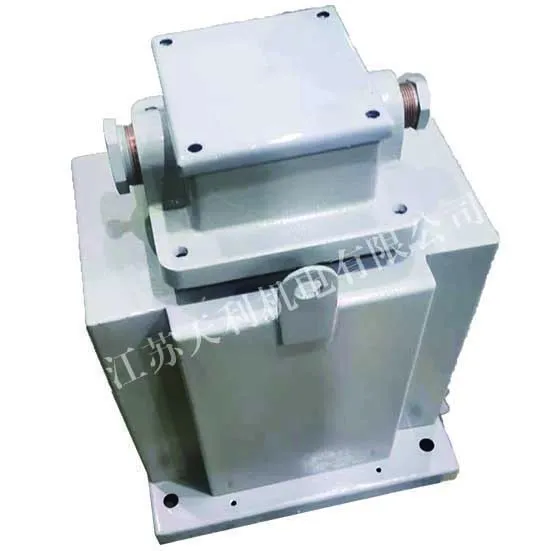
In addition to Air - water Cooled Transformers, we also supply Waterproof Transformers and Electric Furnace Transformers. Our products are designed with high - quality materials and advanced manufacturing techniques to ensure long - term reliability and performance.

6. Contact Us for Purchase and Negotiation
If you are interested in our air - water cooled transformers or other special transformers, and would like to discuss the communication interfaces for the monitoring system, please feel free to contact us. We have a professional sales team that can provide you with detailed product information and negotiate the best purchase terms for you. Our goal is to provide you with the most suitable transformer solutions to meet your industrial needs.
References
- [1] "Industrial Communication Technology Handbook" by Peter Harms
- [2] "Wireless Sensor Networks: A Systems Perspective" by Imrich Chlamtac, Stefan I. Ganz, and Sandeep Kumar
- [3] "Modbus Protocol Specification" by Schneider Electric